
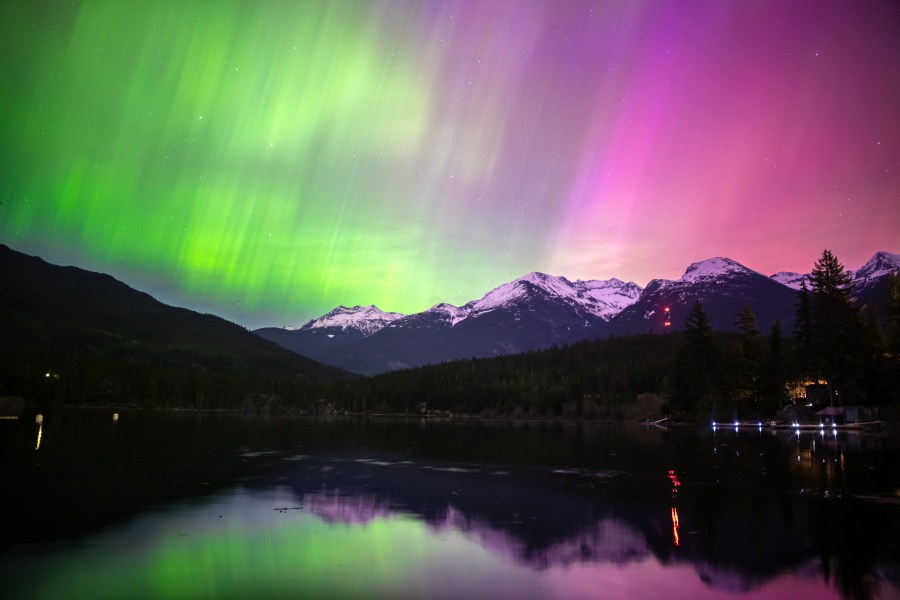
Whether you are an avid traveller or a city dweller one item on all of our bucket lists is to witness the northern lights. I don’t know about you, but I find something enticing and magical about the colourful show.
The most recent geomagnetic storm on May 10th 2024, resulted in an out of this world display which could be seen across many continents across the world. Don’t worry if you missed out this time, the aurora isn’t going anywhere! Check out all my tips and tricks below to ensure you experience it next time.
What are the Northern Lights
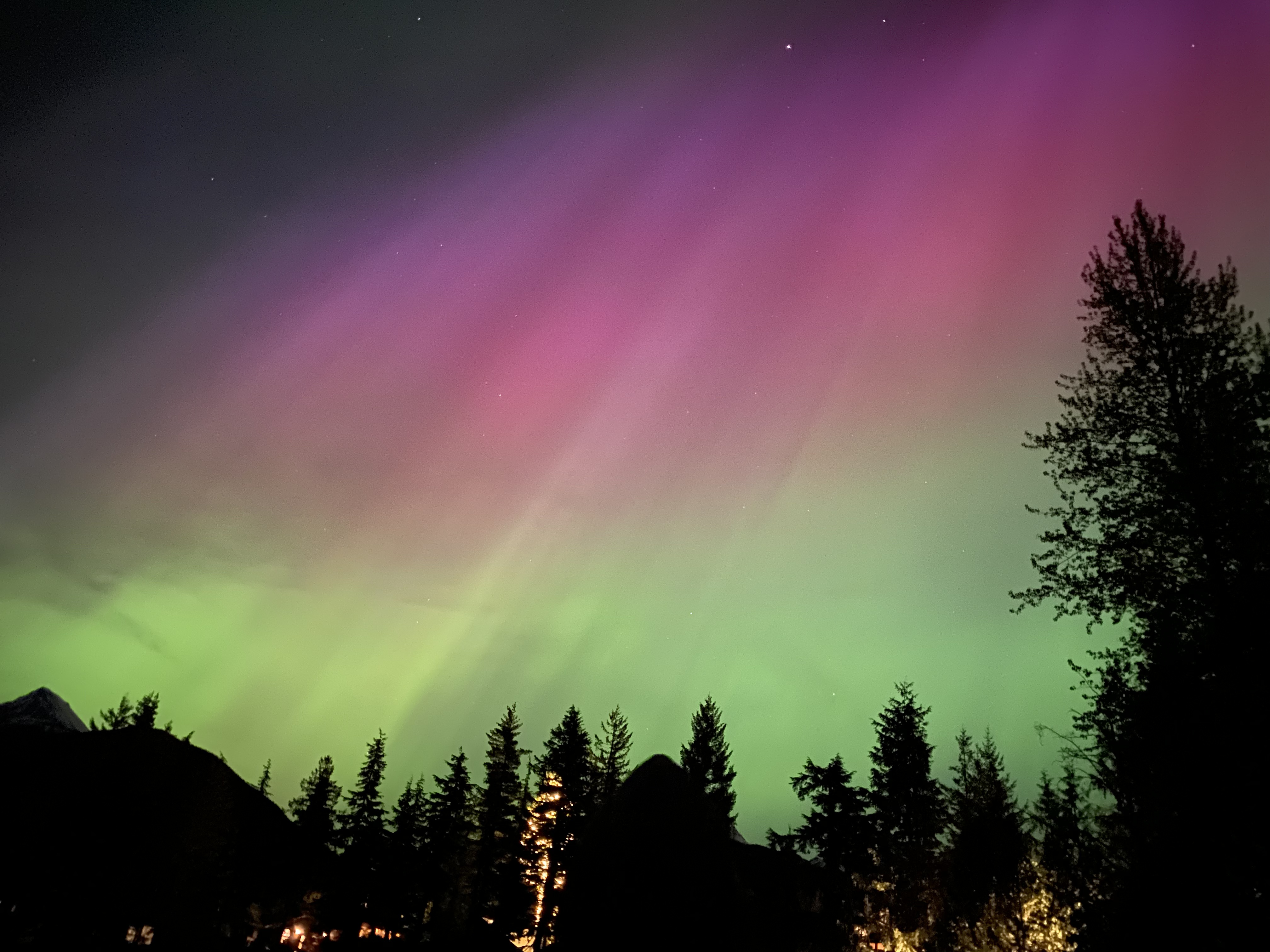
Would you believe it, the Northern Lights are actually caused by particles from the sun. That’s right, the sun provides more than just light and heat. These charged particles from the sun make their way towards the earths atmosphere at high speeds as they travel along solar winds.
The Earths magnetic field protects us from these particles, some deflecting back into space while others are directed towards the planets poles. When these particles interact with atoms from our atmosphere it creates these colourful displays. The dancing lines that we can see are forces in the Earths magnetic field – cool right?
This is the reason we have the Northern Lights – Aurora Borealis, and the Southern Lights – Aurora Australis.
The Colours of the Lights
Bright pops of colour can be seen across our dark clear skies, but normally not by the naked eye. Most of the time in order to see the incredible colours we have to look at the pictures that are cameras take. Greens, pinks and purples can dominate the skies but why mainly these colours?
Each of the colours that we can see are caused by the different gases found in the earths atmosphere. The greens that we see are created by oxygen, whereas the blues pinks and purples are created by nitrogen.
Why does everyone want to see the Northern Lights
For those of us stuck in the 9-5 grind, in the centre of a busy cities and far away from nature, the northern lights are considered a myth. They are captivating, magical and to be honest, surreal. We forget how incredible the natural world really is. Which is why we want to see and experience it!
Where can I see the Northern Lights
You guessed it, the Northern Lights are found in the northern areas of the globe. Here are some of the top visited locations in the hope of experiencing the lights. Norway, Sweden, Iceland, Canada, Lapland, Greenland. If you are lucky you can also see them in Scotland.
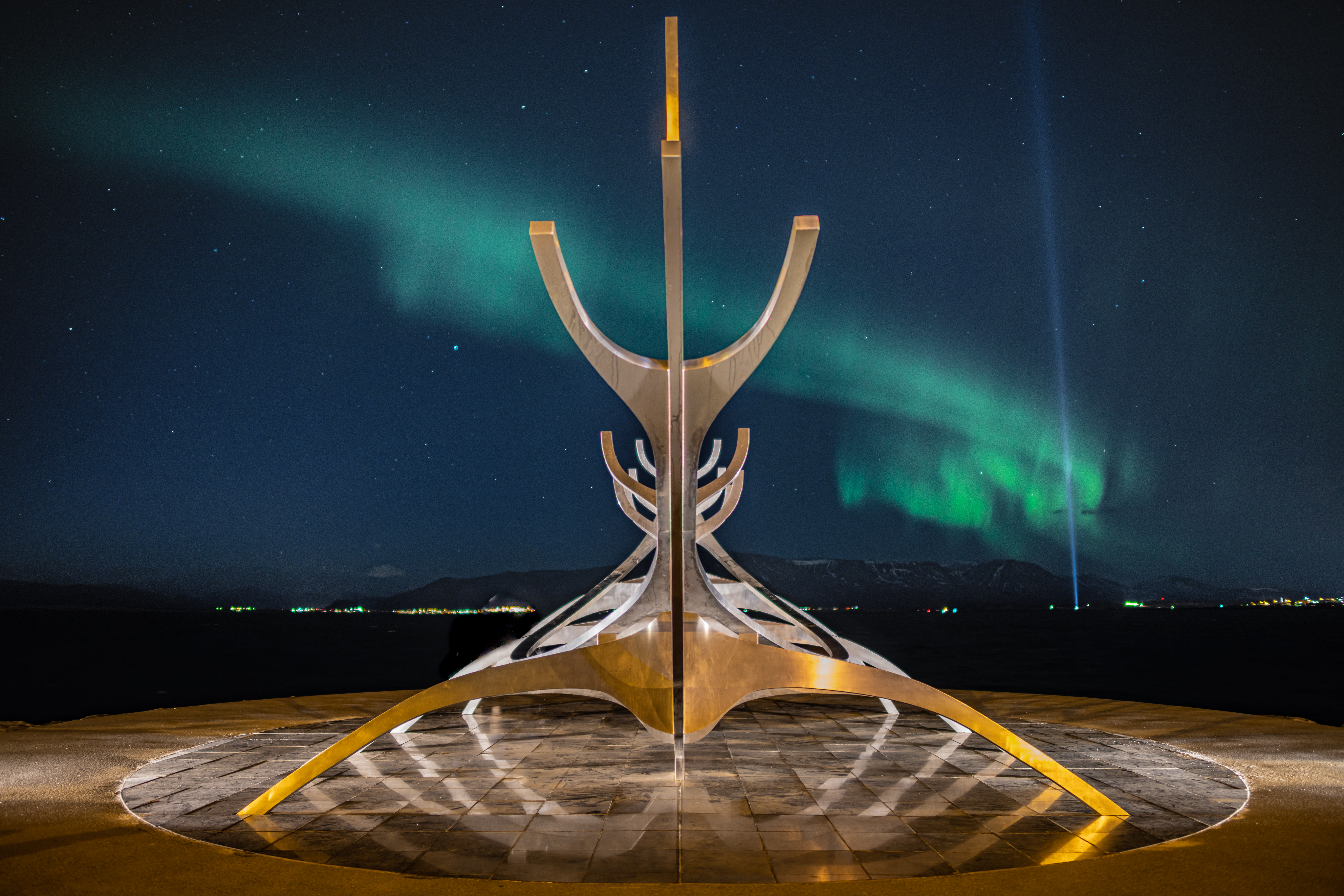
This picture was taken at the Sun Voyager Sculpture in Reykjavik, Iceland.
When to see the Northern Lights
There are a long list of factors that can affect your chance of seeing the northern lights, the main one being a dark sky. With this in mind the best chance of seeing the Northern Lights are from late August to early April.
As we approach winter, our nights get longer giving us more opportunity to see the lights! Not just that colder evenings also provide us with a higher chance of a clear sky.
There’s an App for That
Depending on where you live there may be an opportunity to see the Northern Lights in your home town. I love using the “My Aurora Forecast” app, here I can set my location and it alerts me when there is a chance of viewing the aurora in my area.
This takes the pressure off constantly checking the chance of seeing the lights, but also letting me know of any unique events.
In the app it provides you with everything you need to know, cloud coverage, viewing probability, forecasts and the best places to view near me!
Top Tips for viewing the Northern Lights
Stay up late
The best time to see the northern lights is during the night, which means it’s time to stay up late! During our time in Iceland we booked a bus tour to find the lights, it started at 9pm and we didn’t get home until after 1am. This was still a great time of the evening to look for them as the sunset
Dress up warm
The best months of the year to see the northern lights are October – April, and the best time is well into the night. As we move through the winter months the temperatures can drop below zero once the sun has set, leaving bitterly cold nights to set out aurora hunting.
Make sure when looking for the northern lights that you dress up warm, when I say warm I mean TOASTY. You may be out for several hours look at different locations waiting for a glimpse. Lets not even talk about if there is also a sharp breeze along with it. I recommend taking more than you think you will need.
Beware of cloud coverage
Cloud coverage can be the determining factor of whether you get to see the northern lights or not. Once that cloud comes in it can block all view to the dancing aurora. When looking at the aurora forecast don’t ignore the cloud coverage!
Get away from light pollution
While out aurora hunting, the first thing you want to do is get away from as much light pollution as possible. Get in your car and drive out the cities, this gives you the best chance of having the darkest night sky and therefore dramatically increasing your chances of seeing the lights!
Capture the memory
For many people, seeing the northern lights is a once in a lifetime event and getting a picture of it is the icing on the cake. These days the camera on your phone can get a decent enough shot. Here are some great tips on the what settings you should use! https://blog.frontiersnorth.com/phone-photography
Embrace the moment
We are all victims to it, if there isn’t a picture did it actually happen? There is no harm in taking photos for your memories but please don’t spend your entire evening trying to get that “perfect” shot. If you find yourself lucky enough to witness the northern lights, savour it as not many people do!

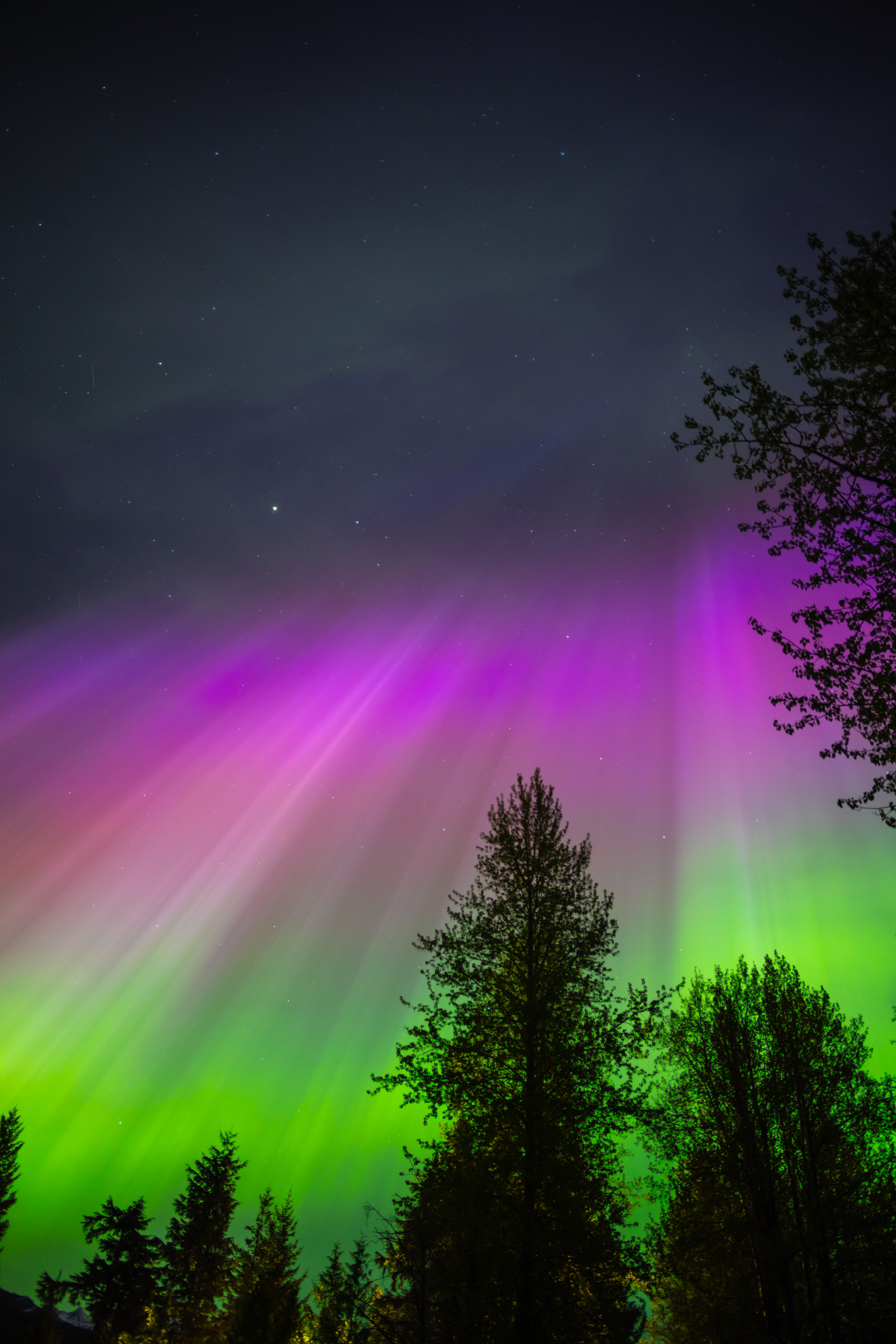
The first time we ever saw the northern lights in Iceland March 2023.
 Her Wild Habit | Travel and Outdoor Adventures